
Many photographers blur the two. Clients confuse them. Beginners mix them. This creates confusion in workflow and expectations, which is why understanding the difference between photo editing and retouching is essential. It keeps your images clean, intentional, and unmistakably yours.
Photo Editing vs Retouching Quick Answer: Photo editing adjusts the overall image. It usually includes exposure, contrast, color, cropping, white balance, and basic consistency across a gallery. Photo retouching changes or refines specific details inside the image. It can include skin cleanup, stray hair removal, object removal, background cleanup, clothing fixes, and more detailed polish.
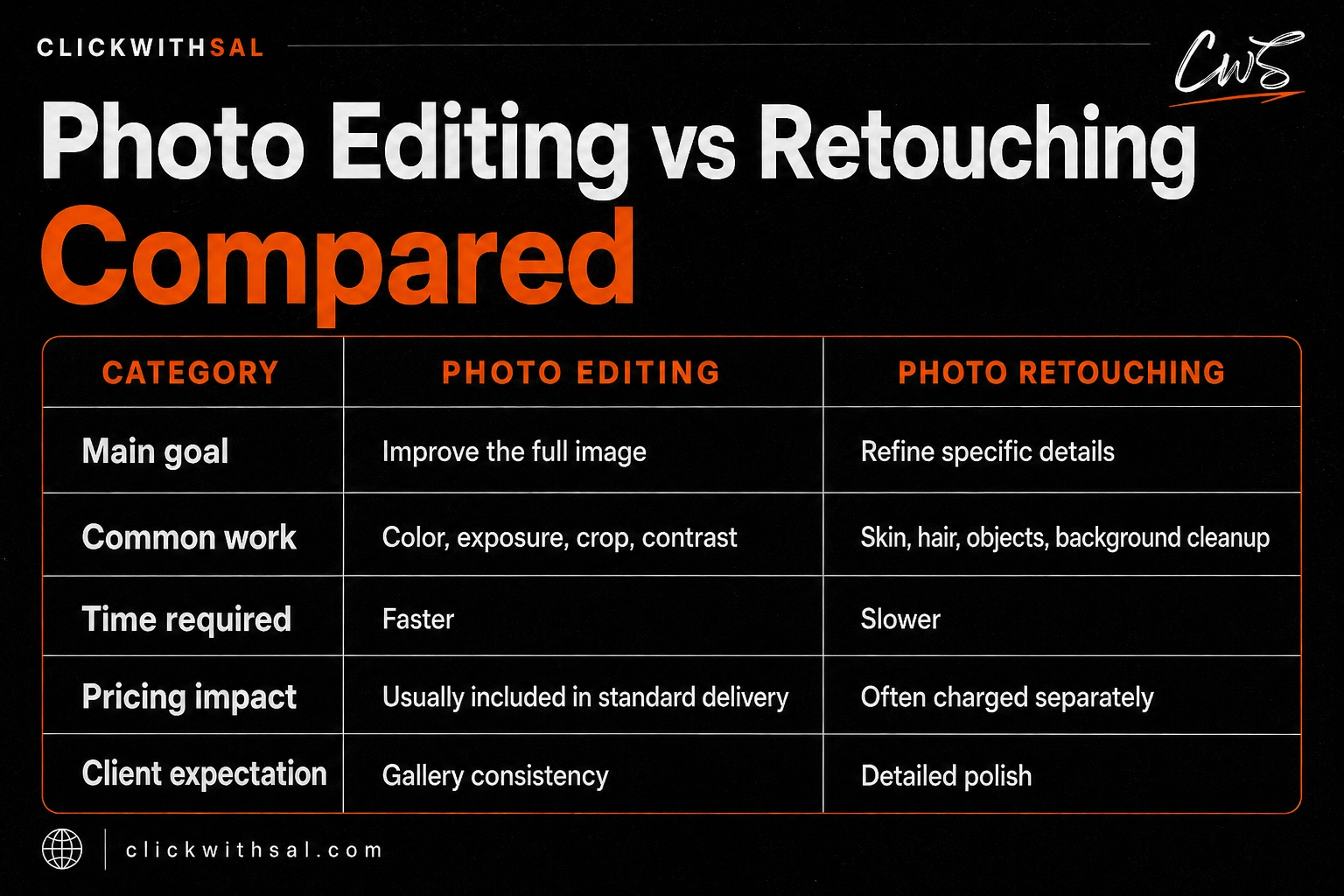
Editing and Retouching

Both matter, but they serve different artistic and professional purposes. Photo editing handles the global shaping of the image through highlights, contrast, shadow adjustments, color corrections, and creative treatments. Retouching is the local refinement, the meticulous touch-up work applied to specific areas.
Bonus: Mastering both processes through a custom workflow is how a photographer builds a signature style and becomes more efficient when delivering client sessions.
What Photo Editing Means

Photo editing is where you shape your visual language and build a mood that matches the story you want the frame to tell. Efficient and foundational editing moves include:
- Exposure balancing
- White balance and tonal correction
- Contrast, saturation, and color grading
- Straightening and cropping
Bonus: For tools that excel in photo editing and help you craft a unique style, we recommend Luminar Neo (use code CLICKWITHSAL for 10% off through our link →) or Dehancer, which is ideal if you want analog-style color behavior.
What Retouching Means

Retouching is reserved for selects that need extra polish, such as portraits, headshots, or photographs intended for print or publication. Not every image needs retouching, but this is the process that elevates a photo to a high-end level. Here are some common retouching moves:
- Skin smoothing
- Blemish and wrinkle cleanup
- Teeth and eye enhancement
- Body shaping
Bonus: For high volume retouching such as weddings and events, we recommend Aftershoot(use code CLICKWITHSAL15 for 15% off). Its AI retouching feature reduces the heavy lifting fast and learns your editing style without compromising quality. For fine art portraiture, Aperty delivers finesse and precise texture handling.
Editing Comes First, Retouching Comes Selectively

Always start with editing before going into retouching. Once you dial in your edit settings, you can apply them to the rest of the batch. Retouching is different; it’s selective and takes more time. Clients need to understand the distinction between photo editing and retouching. Editing is included (unless you are delivering highly stylized edits like the ones in this article), while retouching is a premium service. Clear boundaries protect your time. List these as two separate services in your contracts to avoid revision headaches.
Key Takeaways
- Editing is broad and global.
- Retouching is precise and local.
- Editing comes first; retouching is reserved for select images.
- Tools like Aftershoot and Luminar Neo help scale or refine your workflow with craft and intention.
- Making a clear distinction between photo editing and retouching protects your time and reinforces the value of your work.
Photo Editing vs Retouching FAQs
No. Photo editing adjusts the overall look of an image, including exposure, color, contrast, cropping, and white balance. Retouching focuses on specific details inside the photo, such as skin cleanup, stray hair removal, object removal, clothing fixes, or background cleanup.
Photo editing should come first. Editing creates the overall style, mood, color, and consistency of the image. Retouching comes after that and should be used selectively on images that need extra polish.
No. Retouching is usually reserved for final selects, portraits, headshots, beauty images, commercial photos, or print pieces.
Yes, in most cases. Basic editing is often part of standard photo delivery, while detailed retouching takes more time and should usually be priced as a separate service.
No. They solve different problems. Editing builds the overall image style. Retouching adds detailed polish. Strong photography usually needs clean editing first, then selective retouching only where it actually improves the final result.
Affiliate Disclosure: Some links or promo codes in this article may earn us a commission if you buy through them, at no extra cost to you. That does not change our opinion. We recommend tools based on whether they actually fit the workflow.









Leave a Reply